
In an age dominated by smartphones, social media, and streaming platforms, many brands believe that digital advertising alone is enough to win consumer attention. Yet, despite the rapid growth of online media, Out-of-Home (OOH) advertising continues to play a critical and irreplaceable role in today’s media mix. From highways and hoardings to metro stations and LED screens, OOH remains one of the most powerful tools for building brand visibility, trust, and recall.
Understanding OOH in the Modern Context
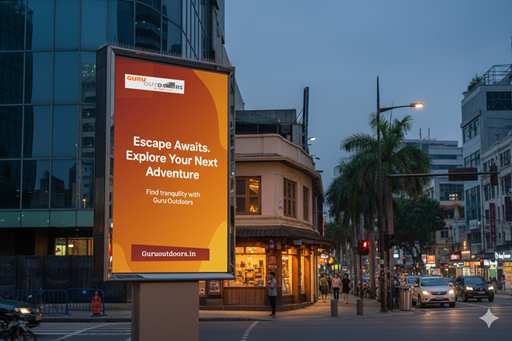
Out-of-Home advertising refers to any form of advertising that reaches consumers outside their homes. Traditional formats such as billboards, hoardings, bus shelters, and transit media have now evolved into data-driven and tech-enabled formats, including DOOH (Digital Out-of-Home), programmatic screens, and interactive displays.
What makes OOH unique is its unavoidable presence. Unlike digital ads that can be skipped, blocked, or ignored, OOH is part of the consumer’s physical environment—seen while commuting, shopping, or socializing.
Why OOH Still Matters in Today’s Media Mix
1. Unskippable and Always-On Visibility
One of the biggest challenges for digital advertisers today is ad fatigue. Consumers are bombarded with ads across apps and platforms, leading to banner blindness and declining engagement rates.
OOH solves this problem naturally. A billboard on a busy road, a glow sign in a marketplace, or a branding panel in a residential society cannot be skipped or muted. This constant, passive exposure ensures consistent brand presence and top-of-mind recall.
2. Builds Stronger Brand Trust
Studies and market behavior consistently show that people trust what they see in the real world more than what they see on screens. Physical advertisements signal legitimacy, scale, and seriousness.
For many consumers—especially in Tier-2, Tier-3 cities and rural India—OOH acts as a trust marker. If a brand is visible on roads, buses, or marketplaces, it is perceived as reliable and established.
3. High Impact on Brand Recall and Memory
OOH advertising benefits from repetition and context. Daily commuters see the same hoardings repeatedly, embedding the brand message into their memory over time.
Unlike fleeting digital ads, OOH creates long-term recall, which plays a crucial role in purchase decisions—especially for categories like real estate, education, retail, FMCG, and financial services.
OOH as a Catalyst for Digital Performance
Contrary to the belief that OOH competes with digital, the reality is that OOH amplifies digital campaigns.
How OOH Boosts Digital ROI:
- Drives branded search queries
- Improves click-through rates of online ads
- Strengthens retargeting campaigns
- Encourages QR code scans and website visits
- Enhances social media engagement
When consumers see a brand on the streets and later encounter it online, familiarity increases trust—and trust drives conversions.
The Rise of DOOH and Data-Driven OOH
Modern OOH is no longer static. Digital Out-of-Home (DOOH) has transformed the medium into a smart, measurable, and flexible channel.
Key Advancements:
- Dynamic creatives based on time, location, and audience
- Programmatic buying similar to digital ads
- Integration with mobile and location data
- Real-time campaign optimization
This evolution allows brands to enjoy the impact of physical presence with the intelligence of digital targeting.
Why OOH Dominates in Bharat (Tier-2 & Tier-3 Markets)
While digital penetration is increasing, OOH remains the strongest medium in non-metro India. Reasons include:
- High daily footfall in local markets
- Limited screen time among certain demographics
- Strong influence of community visibility
- Shared public spaces and collective attention
For local businesses and regional brands, OOH is often the first and most effective step in building awareness.
OOH’s Role in an Integrated Media Strategy
In today’s fragmented media landscape, no single channel works in isolation. OOH acts as the anchor medium that ties the entire media mix together.
Ideal Media Mix Role of OOH:
- Awareness driver at the top of the funnel
- Trust builder across the buyer journey
- Reminder medium near the point of purchase
- Amplifier for digital and on-ground activations
Brands that integrate OOH with ATL, BTL, and digital channels consistently achieve higher campaign effectiveness.
Proven Results Across Industries
OOH has delivered measurable impact across multiple sectors:
- Retail: Increased footfall and store visits
- Real Estate: Higher site visits and inquiries
- Education: Stronger local brand recall
- FMCG: Improved product awareness and trial
- Startups: Faster credibility building
The common factor across all successes is strategic placement, clear messaging, and consistent visibility.
Conclusion: OOH Is Not Optional—It’s Essential
In a world where digital noise is at an all-time high, OOH stands out by being real, visible, and trusted. It doesn’t replace digital—it strengthens it. It doesn’t chase attention—it earns it.
The proven impact of OOH in today’s media mix lies in its ability to:
- Capture attention without interruption
- Build trust through physical presence
- Deliver long-term brand recall
- Enhance the effectiveness of other media channels
For brands aiming to stay relevant, visible, and credible in today’s competitive market, OOH is not just a medium—it’s a strategic advantage.